
Introduction: Riding an E-Scooter in Winter—What Really Changes?
Winter riding brings a different set of challenges for e-scooter users: colder temperatures, reduced battery efficiency, slippery road conditions, and limited visibility. But with the right preparation, winter commuting and short rides can remain both safe and practical.
This winter riding guide is written for Circooter riders, focusing on real-world riding habits rather than ideal conditions. Whether you rely on your scooter for daily commuting or occasional trips, these tips will help you stay warm, ride safely, and protect your scooter throughout the colder months.
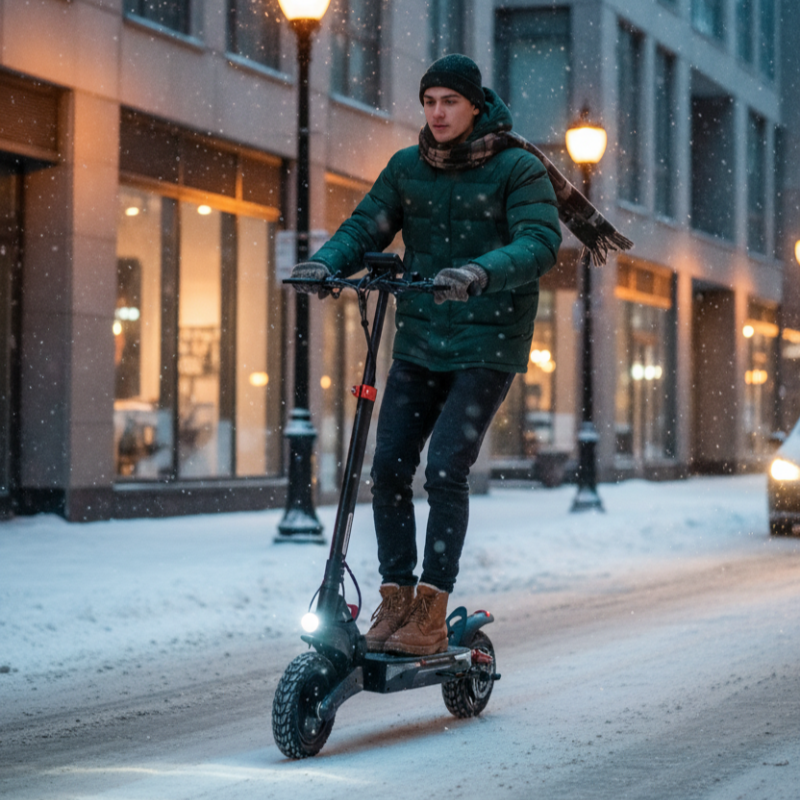
1. Dress Smart for Cold-Weather E-Scooter Riding
Staying warm is essential in winter, but bulky clothing can restrict movement and affect balance.
Best practices for winter riding gear:
- Wear layered clothing: a thermal base layer, an insulating middle layer, and a windproof outer shell
- Use insulated, wind-resistant gloves to maintain grip and braking control
- Choose waterproof or winter shoes to keep feet warm and stable
- Protect exposed areas with a neck gaiter or face covering in strong winds
Comfort and mobility matter just as much as warmth when riding in cold conditions.

2. Adjust Your Riding Style for Winter Road Conditions
Cold weather affects road surfaces more than most riders expect. Frost, wet leaves, and light snow can significantly reduce traction.
Winter riding tips:
- Accelerate gradually to avoid wheel slip
- Brake earlier and more gently than usual
- Avoid sudden turns or sharp lean angles
- Reduce speed on shaded roads, bridges, and painted surfaces
Smooth and predictable riding is the key to winter e-scooter safety.
3. Cold Weather Battery Care: What Every Rider Should Know
Low temperatures directly impact lithium-ion battery performance. Reduced range and slower power delivery are normal in winter.
How to protect your e-scooter battery in winter:
- Store your scooter indoors whenever possible
- Charge the battery at room temperature
- Avoid charging immediately after riding in freezing conditions
- Plan for shorter range and recharge earlier than usual
Consistent winter battery care helps maintain performance and extends long-term battery life.
4. Tire Pressure and Traction in Cold Conditions
Cold air naturally lowers tire pressure, which can affect stability and braking.
Winter tire checklist:
- Check tire pressure weekly during cold months
- Follow manufacturer-recommended
- PSI levelsInspect tires for wear, cracks, or hardened rubber
- Slightly lower pressure can improve grip, but avoid under-inflation
Good traction is essential for safe winter riding.
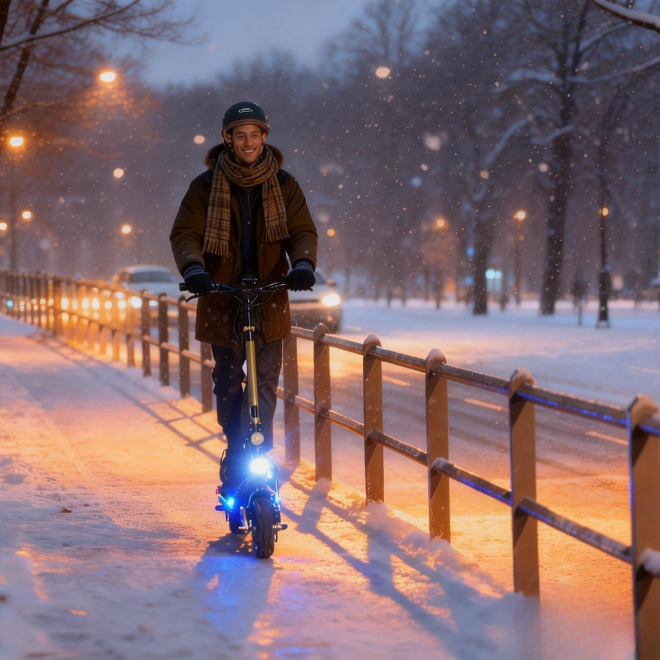
5. Visibility and Lighting: A Winter Safety Priority
Shorter days and poor weather reduce visibility for both riders and drivers.
Improve winter riding visibility:
- Use front and rear lights at all times, even during daytime
- Wear reflective clothing or accessories
- Avoid dark, low-contrast outfits
- Keep lights and reflectors clean and unobstructed
Being visible is one of the most effective ways to reduce winter riding risks.

6. Post-Ride Maintenance to Protect Your E-Scooter
Winter moisture, dirt, and road salt can accelerate wear if left untreated.
After-ride winter maintenance tips:
- Wipe down the frame, deck, and exposed components
- Dry braking parts after wet rides
- Avoid high-pressure water sprays
- Regularly inspect bolts, folding mechanisms, and suspension
Simple post-ride care helps keep your scooter reliable throughout winter.
Final Thoughts: Ride Smarter, Not Harder, This Winter
Winter doesn’t mean your e-scooter has to stay unused. With proper clothing, thoughtful riding habits, and consistent maintenance, cold-weather riding can remain safe and dependable.
Prepare well, ride cautiously, and your Circooter will continue to support your journeys—even in winter.


Leave a comment
All comments are moderated before being published.
This site is protected by hCaptcha and the hCaptcha Privacy Policy and Terms of Service apply.